
Western Cape Government Traffic Officer Bursary 2026: The Truth About This Career Path Before You Apply
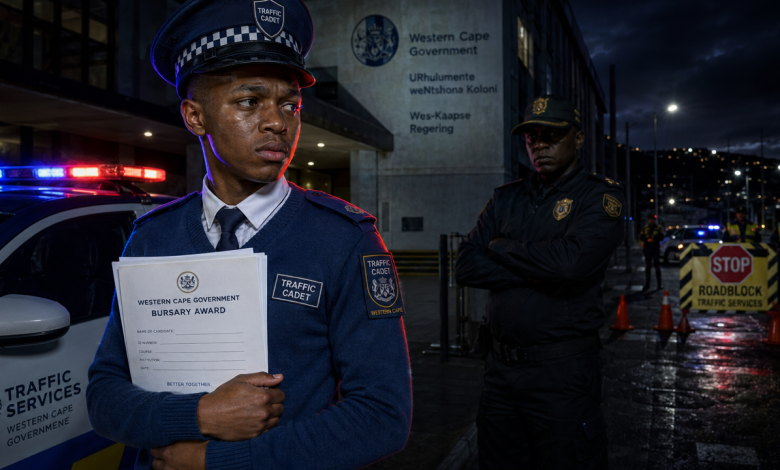
If you are looking at the Western Cape Government Traffic Officer Bursary 2026, this is one of those South Africa career opportunities that can genuinely change your direction, but only if you understand what you are signing up for. Through trusted youth opportunity platforms like Studentdesk South Africa career opportunities, many applicants will see the headline and rush to apply. That is a mistake. This bursary is not just “free study.” It is a direct pipeline into a demanding law-enforcement career environment that needs discipline, emotional toughness, physical readiness, and a real appetite for public service.
What the Western Cape Government Traffic Officer Bursary 2026 Actually Offers
The Western Cape Government Mobility Department is inviting young South Africans to apply for its Student Cadet Traffic Officer Bursary Programme for 2026.
Here is the core offer:
- A 12-month full-time study bursary
- Training toward a Further Education and Training Certificate: Road Traffic Law Enforcement
- Potential placement at traffic centres across the Western Cape
- A structured route into a recognised public-sector enforcement career
That already makes it stronger than many vague “youth programmes” online. This is tied to a real government department and a defined training outcome. That matters.
But let’s be blunt: this is not a soft office bursary. You are preparing for frontline road traffic law enforcement. That means authority, pressure, exposure to conflict, long hours in the field, and a job where the public will not always like you.
Why This Western Cape Government Opportunity Gets Attention
There is a reason this programme draws interest every year.
For many young people, especially those struggling to break into formal employment, the Western Cape Government bursary route offers three things that are increasingly rare:
1. It has clearer career direction than most bursaries
A lot of bursaries fund study without a visible employment path. This one is different. It is linked to a specific occupation.
2. It carries government credibility
A provincial government programme usually comes with stronger legitimacy than random private adverts floating around social media.
3. It gives practical career entry, not just theory
This is useful if you do not want to collect certificates and still sit at home unemployed.
That said, a government-linked opportunity is not automatically easy, glamorous, or guaranteed. You still need to qualify, perform, and survive the selection process.
Who Should Apply for the Western Cape Government Traffic Officer Bursary
This bursary is best suited for people who are serious about a disciplined public service career.
You should strongly consider applying if:
- You want a career in law enforcement, road safety, public service, or compliance
- You are comfortable with structured rules, uniforms, discipline, and accountability
- You can handle public-facing work, including difficult people
- You are physically and mentally prepared for a demanding training environment
- You want a career path with more stability than casual jobs or short-term internships
- You are willing to work in different locations across the Western Cape if placed
This matters because too many applicants chase the title without thinking about the daily reality. Traffic law enforcement is not mainly about standing on the roadside writing fines. It involves legal procedures, conflict handling, road safety enforcement, observation, reporting, and representing state authority in public spaces.
If that gives you purpose, this may be a strong fit.
Who Should Think Twice Before Applying
Let me save some people time: not every bursary is for everybody.
You may want to avoid this opportunity if:
- You are only applying because you are desperate for “anything”
- You dislike authority structures and strict routines
- You struggle with confrontation
- You want a relaxed desk-based role
- You are not ready for a physically demanding or disciplined training process
- You are uncomfortable being posted where the department needs you
- You are chasing quick money rather than a long-term career path
That last point is important. If your main goal is immediate income with minimum pressure, this may disappoint you. Training programmes linked to enforcement careers often require commitment before rewards become obvious.
What the Selection Process Will Probably Test
The competitor content confirms that shortlisted candidates will be required to complete additional assessments, but it does not fully list them. In programmes like this, that usually means the department is not just screening paperwork. They are likely trying to identify whether you can actually do the job.
Expect more than a simple online application
For bursary-linked traffic officer training, shortlisted applicants are often assessed on areas such as:
- Document compliance
- Communication ability
- Physical readiness
- Medical fitness
- Character and conduct suitability
- Possible interviews or competency checks
Do not assume you can “wing it.” Government selection processes may move slowly, but they often eliminate weak applicants fast once formal screening begins.
What this tells you about the opportunity
This is a serious pipeline, not a token youth initiative. The department is likely trying to reduce bad-fit applicants before training starts. That is a good sign for legitimacy, even if it makes the process tougher.
The Real Pros and Cons of the Western Cape Government Traffic Officer Bursary
Pros
Clear occupational direction
You are training toward a known role, not a vague future.
Government-backed credibility
That improves trust and can strengthen your CV.
Practical public-service value
Road safety and traffic law enforcement are meaningful work with visible impact.
Potential entry into stable employment structures
Nothing should be assumed, but this route is more structured than many random private “opportunities.”
Skills with transfer value
Discipline, legal procedure awareness, public interaction, reporting, and compliance knowledge can support future career mobility.
Cons
It is not an easy career path
You may face pressure, confrontation, weather exposure, and emotionally draining work.
Training can be demanding
If you are not physically and mentally ready, the opportunity may overwhelm you.
Placement flexibility may be limited
You may not get your ideal location.
Public-facing enforcement jobs are not universally loved
You need thick skin. People will challenge you.
Career expectations must stay realistic
A bursary is a starting point, not an instant dream lifestyle.
Career Growth Potential: Is There a Future Here?
Yes, there can be, if you treat this properly.
A traffic officer pathway can lead to:
- Long-term public-sector enforcement work
- Broader road safety and compliance experience
- Exposure to legal and regulatory systems
- Opportunities to build a reputation in law enforcement-related environments
- Future progression depending on departmental needs, performance, and qualifications
Now the honest part: growth does not happen just because you got in. Government systems often reward persistence, clean conduct, reliability, and patience. If you are the type who loses focus after entry-level training, do not expect magic.
But if you are disciplined, this kind of opportunity can become a real foundation.
Work-Life Balance and Job Reality Most Applicants Ignore
This is where many hopeful applicants fool themselves.
Traffic enforcement work can involve:
- Outdoor conditions
- Shift-type demands depending on operational needs
- Dealing with road incidents, non-compliant drivers, and stressful situations
- Standing for long periods
- Working when others are commuting, travelling, or causing problems
So ask yourself one hard question:
Do you want the image of the uniform, or do you want the life that comes with the job?
Those are not the same thing.
If you want purpose, structure, and public-facing responsibility, fine. If you want comfort and predictability every day, this is probably not your best match.
Is This Opportunity Actually Worth It?
Expert verdict: Yes, for the right person
The Western Cape Government Traffic Officer Bursary 2026 looks worth serious consideration because it appears tied to a legitimate provincial department, a real qualification, and a career path that is more concrete than many youth programmes.
But worth it does not mean easy.
This is worth applying for if you want a disciplined, service-driven, law-enforcement-adjacent career and you are prepared for the pressure.
It is not worth it if you are applying blindly, hate structure, or are simply chasing any funded opportunity without understanding the role.
That is the blunt truth.
In South Africa’s current job market, genuine structured opportunities matter. But the smartest applicants do not just ask, “Can I apply?” They ask, “Will this path suit me six months from now when the excitement is gone?”
That question will save you from wasting time.
Western Cape Government Traffic Officer Bursary 2026: Smart Application Strategy
The closing date listed in the competitor content is:
05 May 2026
Do not wait for the final day. Government application systems and document processes have a nasty habit of becoming stressful at the last minute.
Step 1: Verify the official advert carefully
Before submitting anything:
- Confirm the official application platform or instructions
- Read every eligibility requirement in full
- Check whether certified documents are required
- Make sure your contact details are active and professional
Because the competitor article is incomplete in places, you should rely on the official Western Cape Government bursary notice for the final qualification criteria and screening requirements.
Step 2: Prepare your documents properly
At minimum, make sure your documents are:
- Clear and readable
- Correctly named if uploading online
- Not outdated where certification is needed
- Consistent with your application details
A shocking number of applicants fail because of sloppy admin, not lack of potential.
Step 3: Tailor your motivation
If there is space to motivate your application, do not write nonsense like:
“I am hardworking and passionate and would appreciate this opportunity.”
That says nothing.
Instead, explain:
- Why road traffic law enforcement interests you
- Why you can handle disciplined training
- Why public service matters to you
- Why you understand the seriousness of the role
Keep it honest. Recruiters can smell generic copy-paste motivations instantly.
Step 4: Get ready for assessments now
Do not wait to be shortlisted before taking the process seriously.
Prepare yourself by working on:
- Basic fitness and stamina
- Clear communication
- Confidence under pressure
- Professional conduct
- Understanding what traffic officers actually do
Step 5: Answer unknown numbers and check messages
Many good candidates miss follow-up communication because they ignore calls, lose email access, or use unreliable phone numbers.
If you apply, become reachable.
Common Applicant Mistakes That Kill Their Chances
Applying without understanding the job
This is the biggest one. People see “bursary” and stop thinking.
Sending weak or incomplete documents
A blurred ID copy can ruin a real opportunity.
Ignoring behavioural fit
If you cannot function in disciplined environments, the process may expose that quickly.
Waiting too long
Late applications often become rushed applications. Rushed applications are usually bad applications.
Treating a government process casually
Just because a role is publicly advertised does not mean standards are low.
Questions You Should Ask Yourself Before Applying
Do I genuinely want law enforcement-related work?
Not “Would my family be proud?” Not “Does the uniform look good?”
The actual work.
Can I handle structure and scrutiny?
Traffic officers do not work in a casual environment.
Am I prepared for a long-term path, not just a short-term benefit?
This matters if you want real return from the opportunity.
Would I still want this role if it becomes tough, repetitive, or public-facing?
That answer tells you whether to apply.
Final Take on the Western Cape Government Traffic Officer Bursary
The Western Cape Government Traffic Officer Bursary 2026 is one of the more meaningful opportunities for young South Africans who want a serious route into public service and law enforcement-related work. It has more credibility and more direction than many generic bursary posts online.
But this is not for the undecided, the lazy, or the image-chasers.
If you are disciplined, service-minded, and ready for the realities of enforcement work, apply properly and early.
If you want comfort, vague flexibility, or an easy ride, move on and find something better suited to you.
That is how smart career decisions are made.
For more honest breakdowns of South Africa career opportunities, internships, learnerships, bursaries, and youth programmes, keep checking Studentdesk and focus on opportunities that truly fit your goals, not just your panic.